FLAMES OF FREEDOM: 1821
Medium / Format
GAME / 3D ACTION PLATFORMER
Production
NOUMENON – ORIGINAL IP
Noumenon Role
DEVELOPER / PUBLISHER
Status / Period
CURRENTLY IN EARLY ACCESS / 2025 – PRESENT
Flames of Freedom: 1821 is an original game conceived by brothers Emmanuel and George Stavroulakis and developed and published by Noumenon. Set in a fantasy interpretation of the Greek Revolution of 1821, it brings the studio’s visual-production and technical capability into a world of its own.
ACTION. PLATFORMING. 1821.
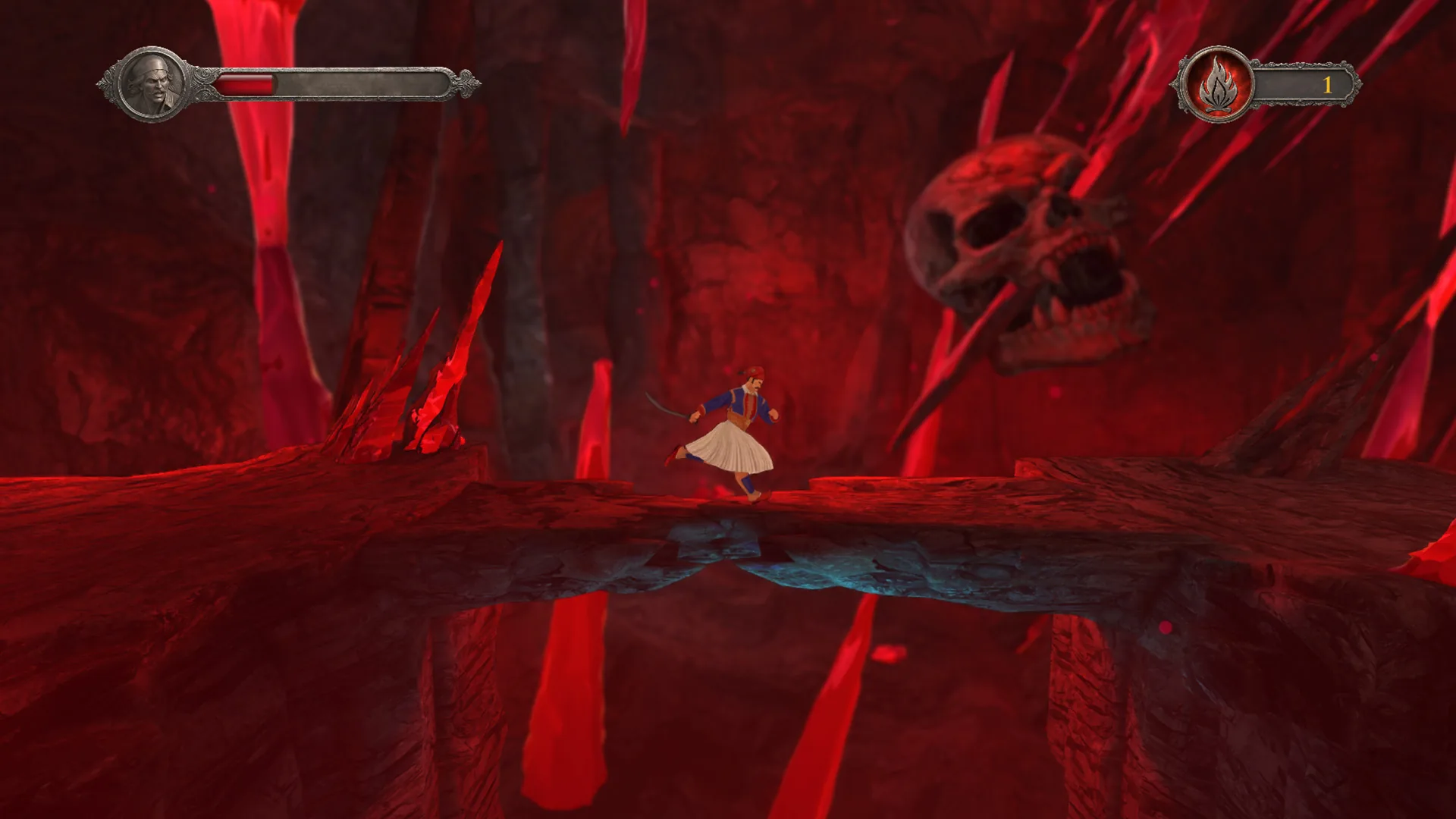
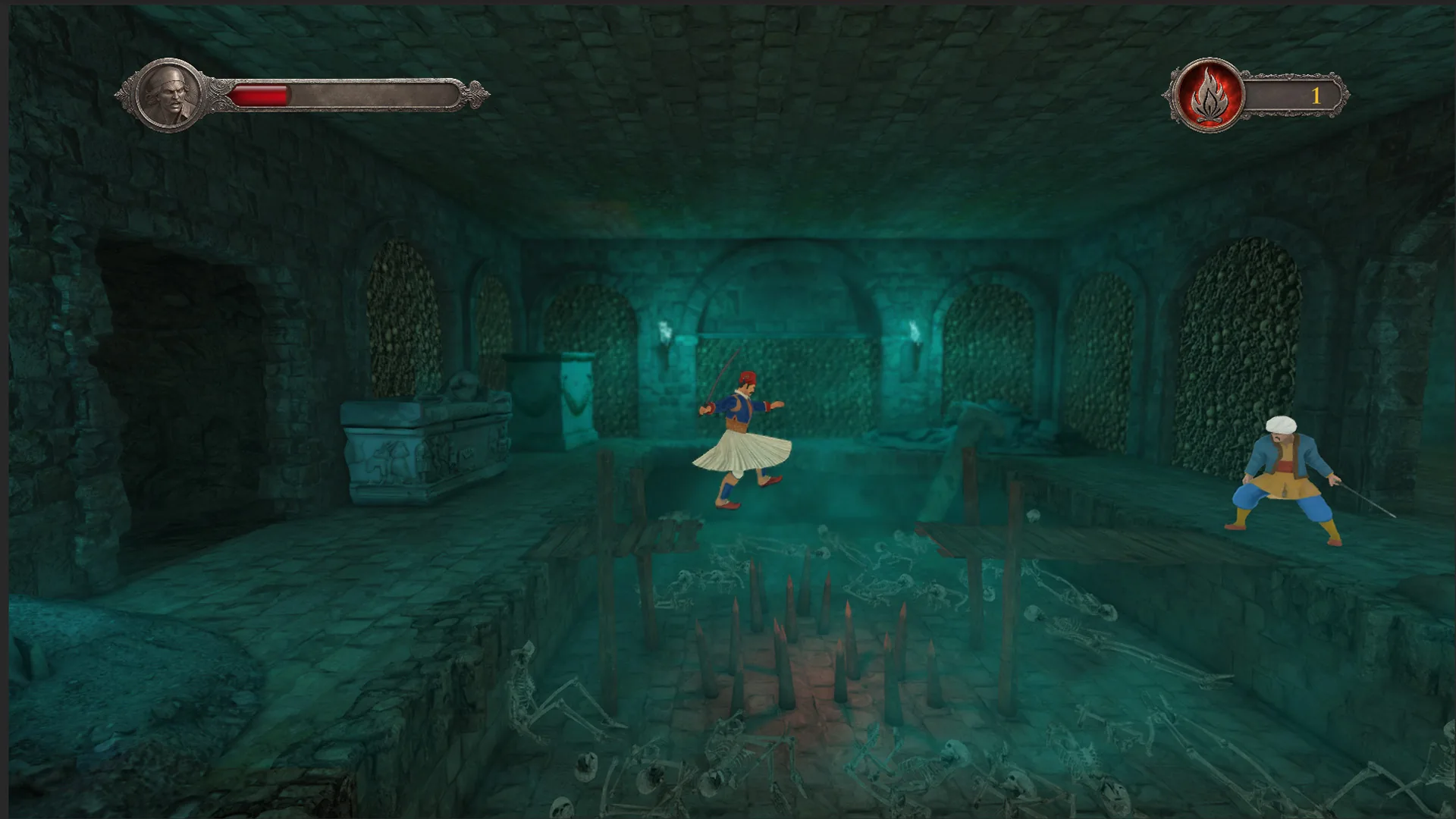
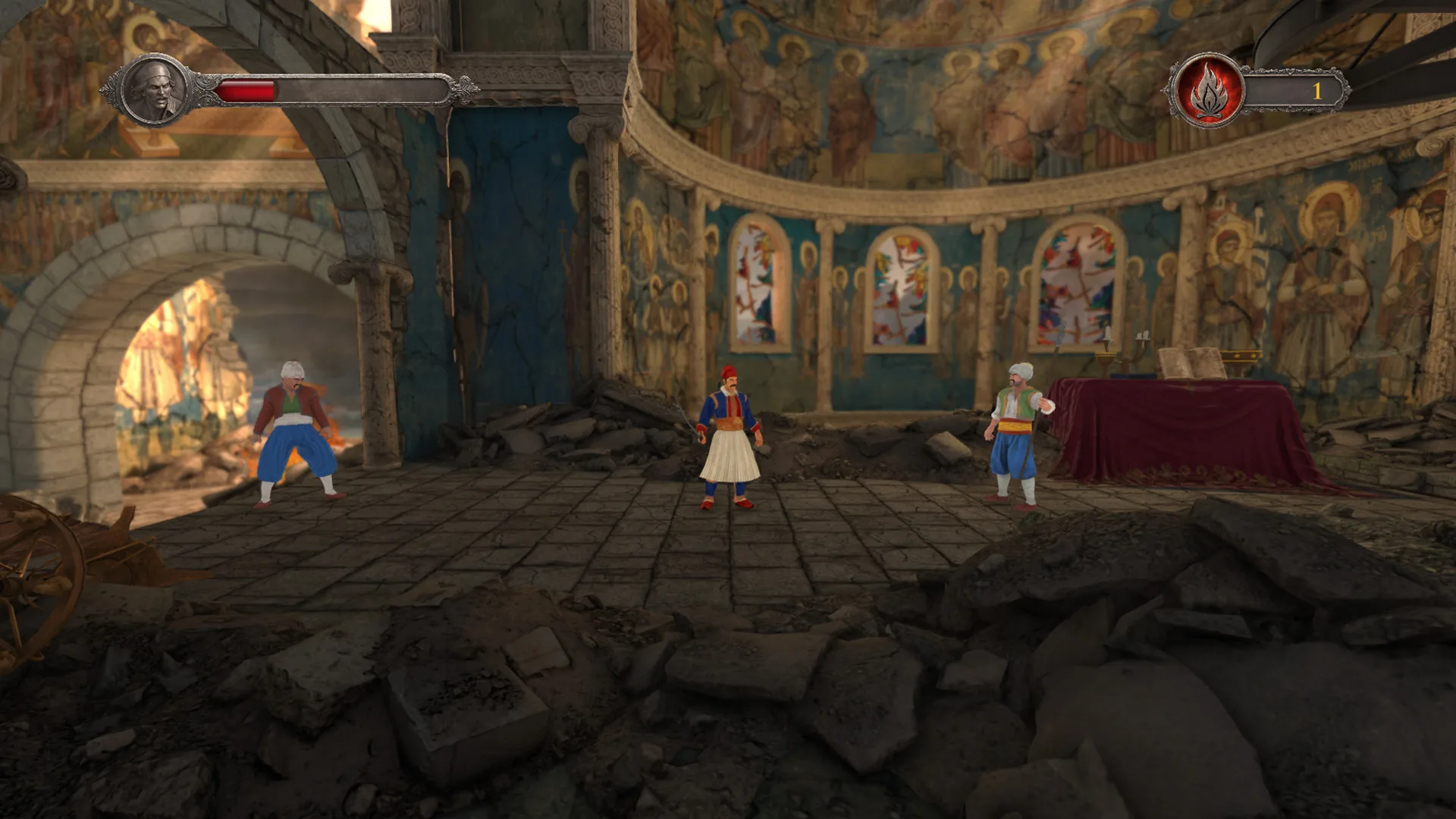
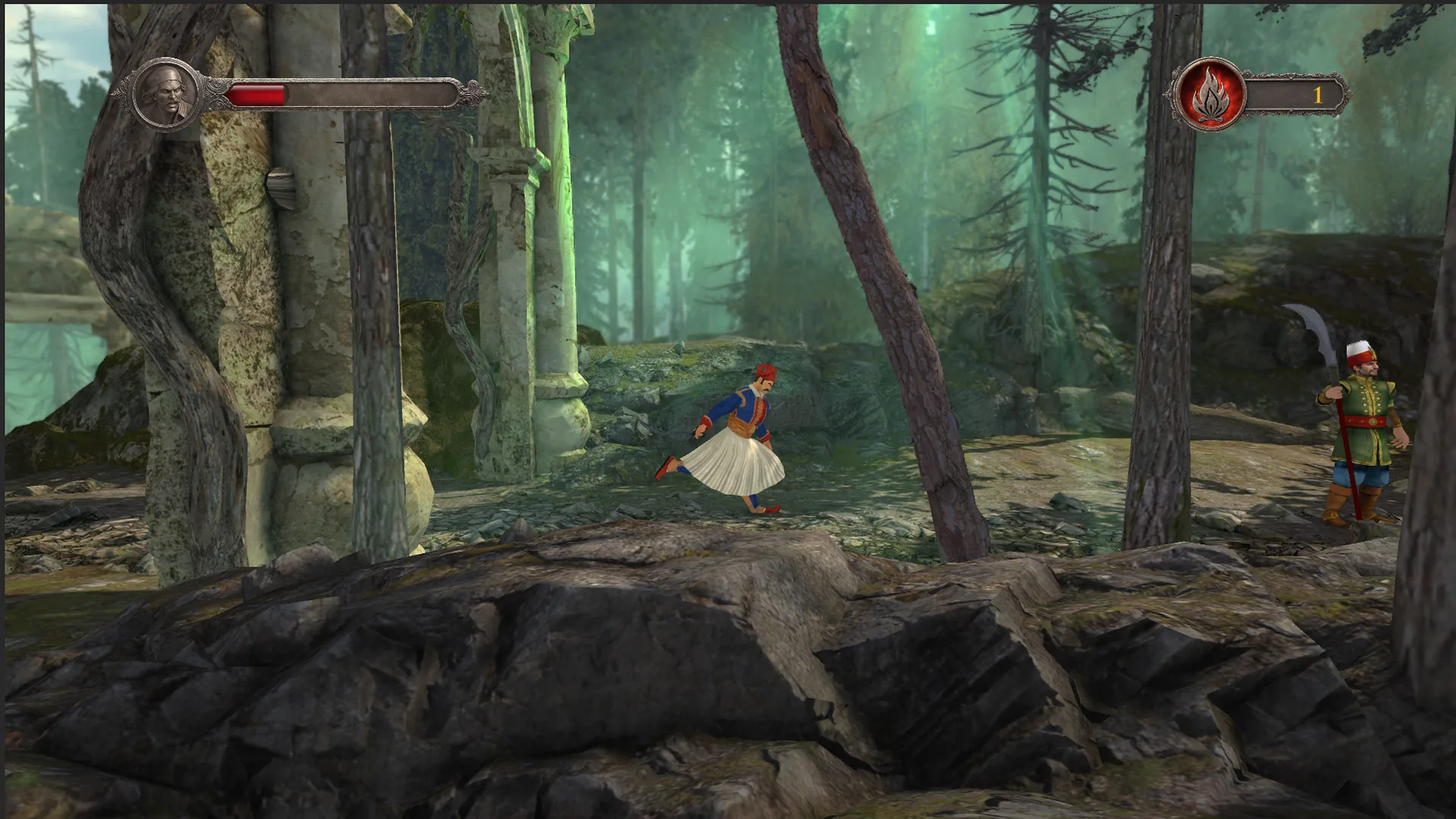
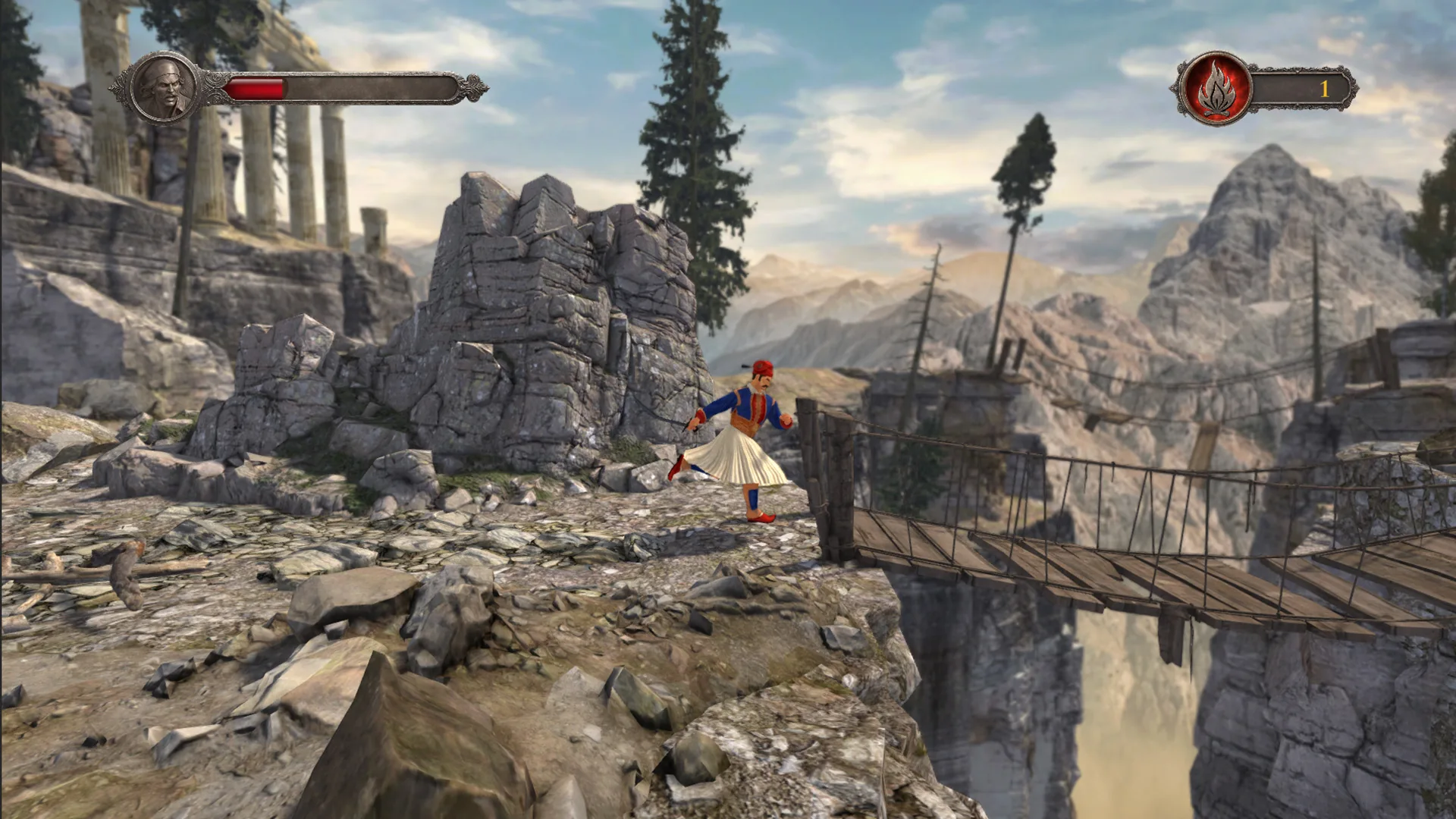
Flames of Freedom: 1821 is a 3D side-scrolling action platformer with roguelite structure and persistent meta-progression, set in a fantasy interpretation of the Greek Revolution of 1821.
Combat is built around attacks, positioning, dodging and cooldown management. Traversal is direct and physical: running, jumping, rolling and navigating handcrafted side-scrolling environments.
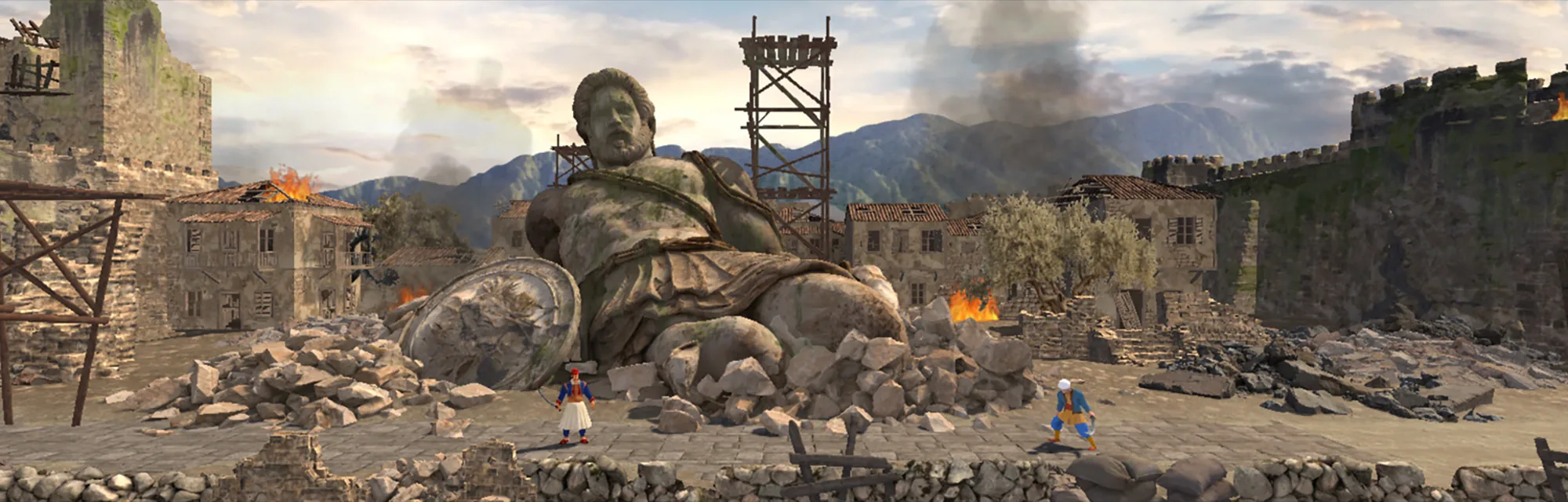
The historical setting is treated as a source of atmosphere, memory and identity rather than a literal reconstruction, allowing historical Greek environments, Orthodox imagery, Ancient Greek references and supernatural elements to coexist inside one mythic world.
THREE CHAMPIONS
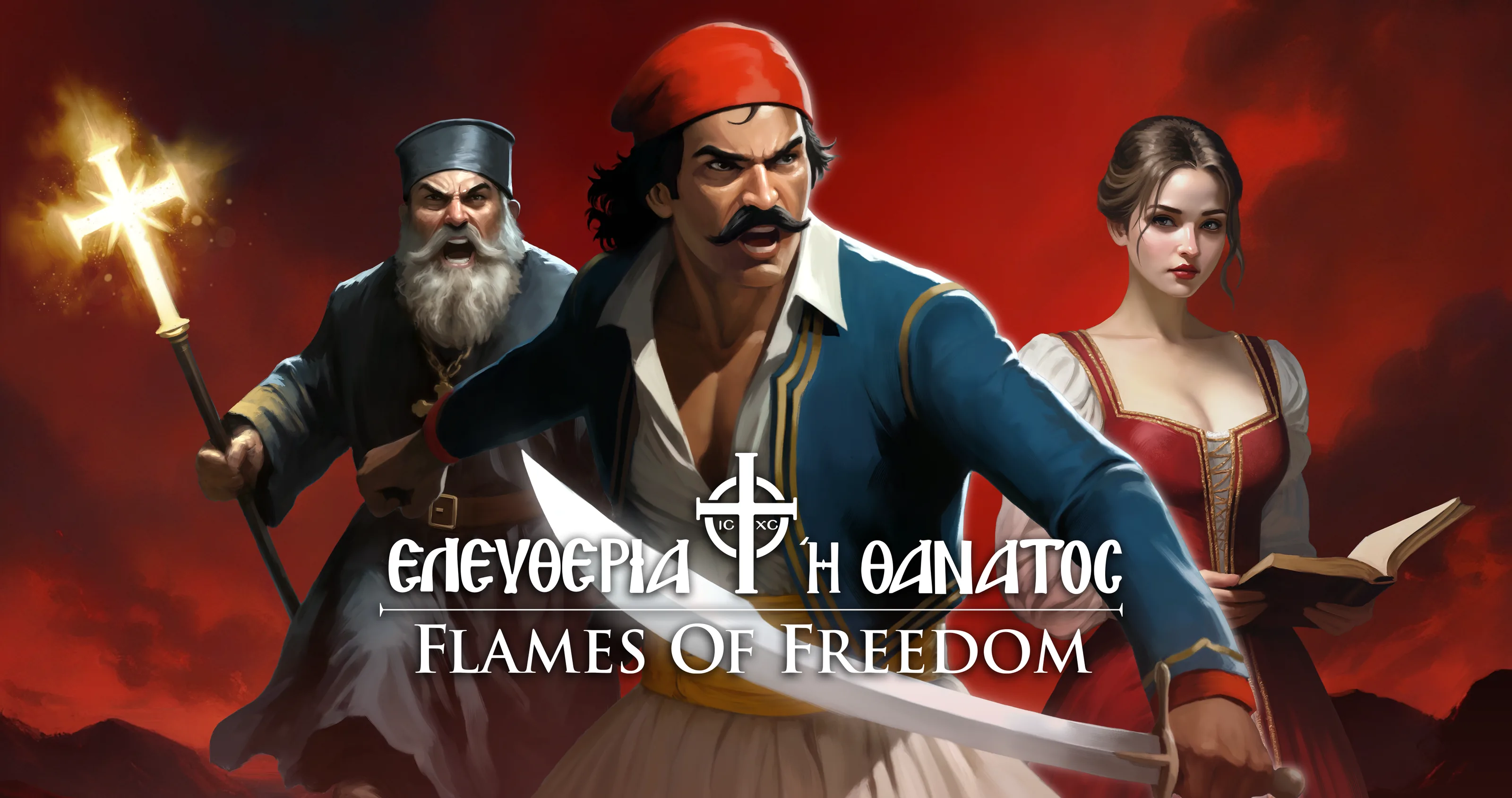
The base game is designed around three fictional Champions. They share the same fundamental controls and traversal abilities, but each is built around a different combat identity: Pressure, Space and Manipulation.
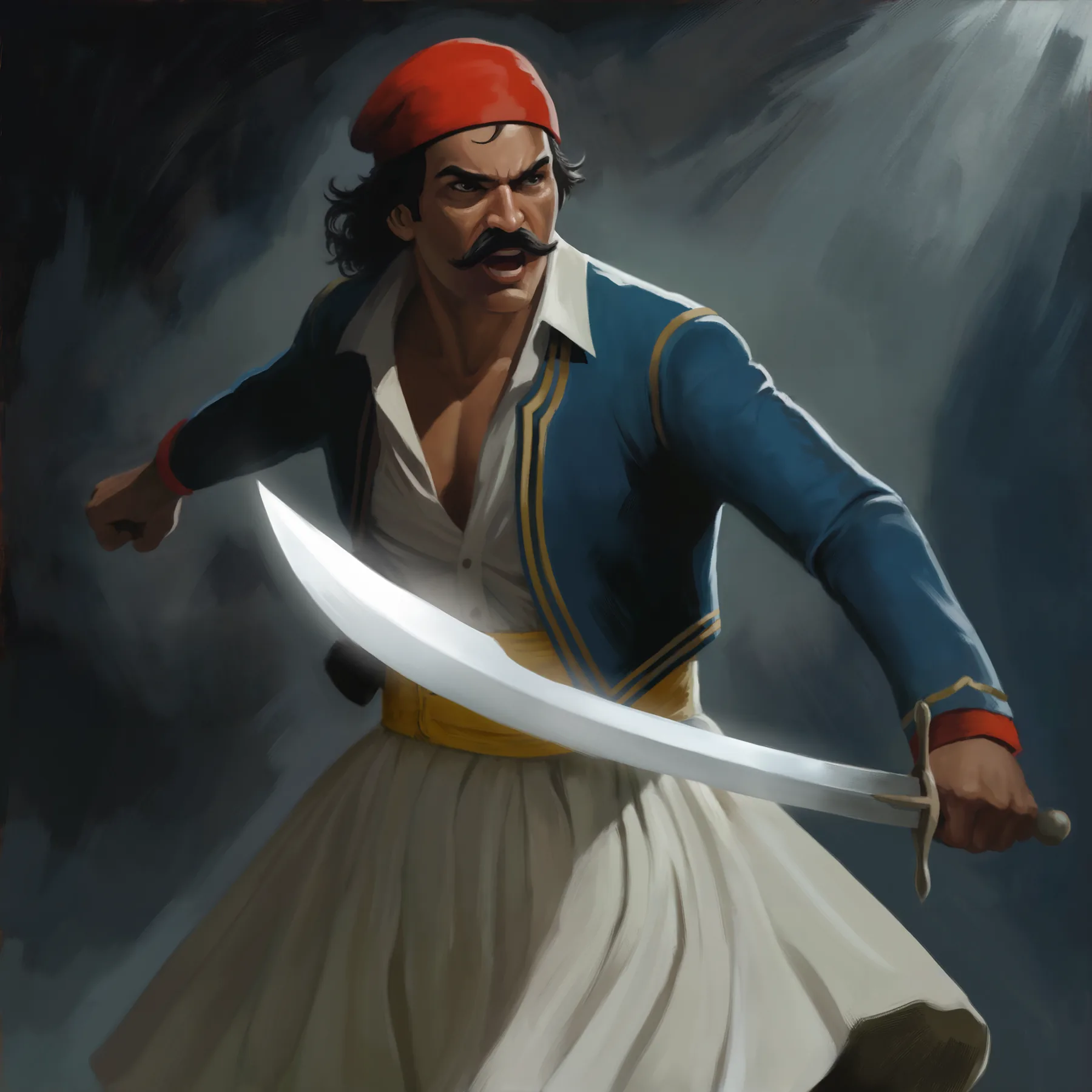
THE EVZONE
PRESSURE
Fast and aggressive. A close-range fighter built around sustained melee pressure, with a sword-and-pistol foundation
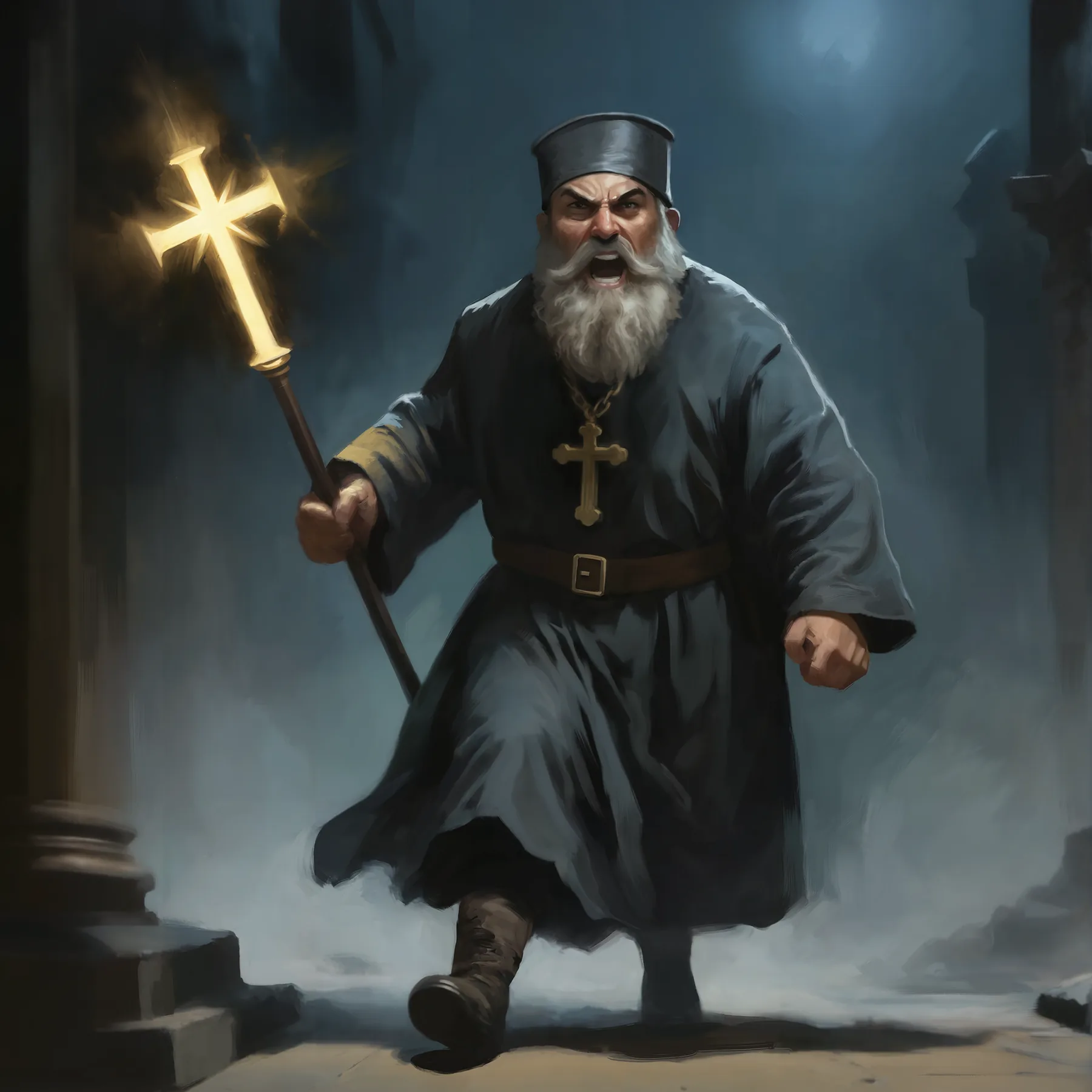
THE PRIEST
SPACE
Slower and more deliberate, using reach, impact, area control and survivability to decide where enemies can comfortably fight.
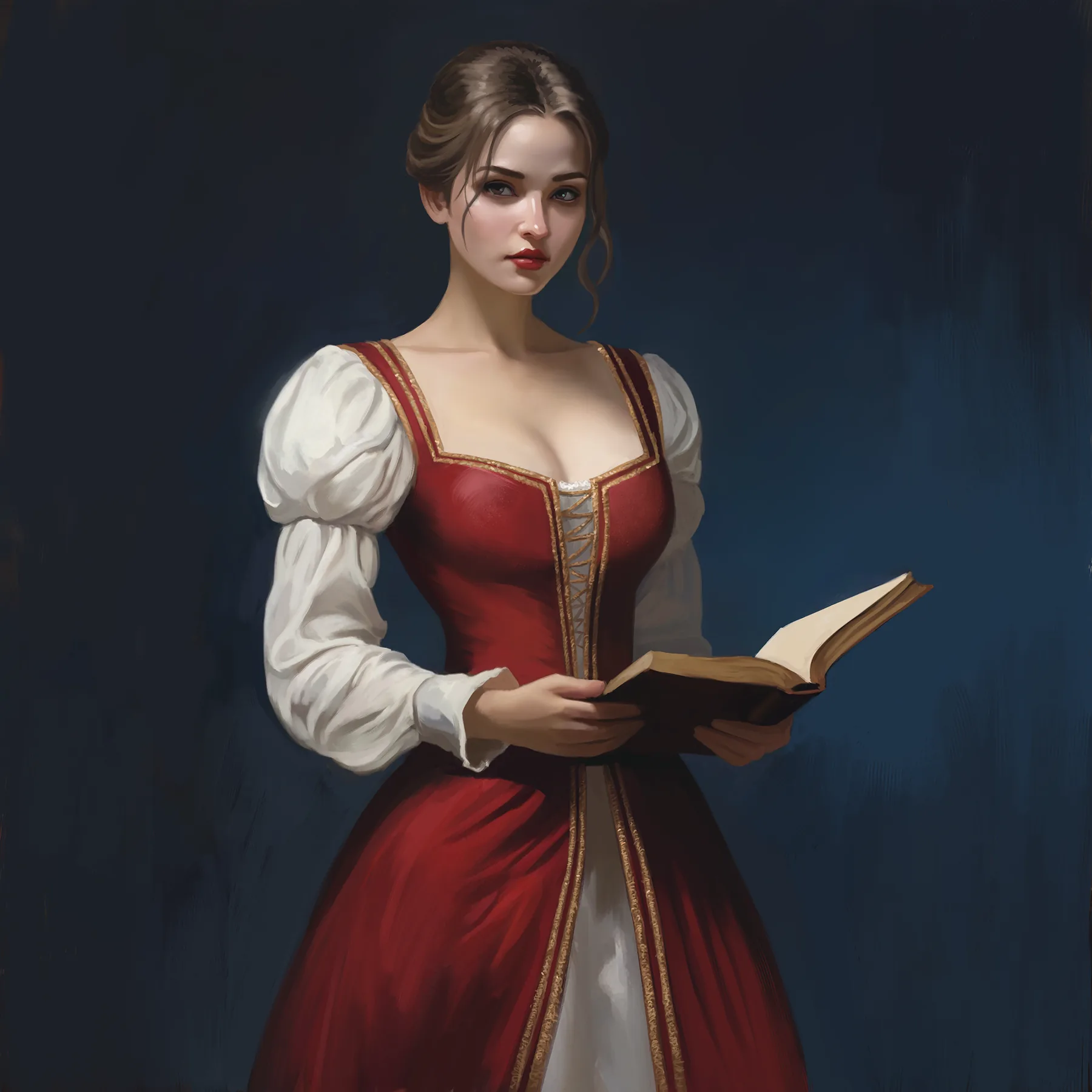
THE NOBLE
MANIPULATION
Fast, fragile and high-skill, built around status effects, battlefield manipulation and deliberate setup.
BUILDING THE WORLD
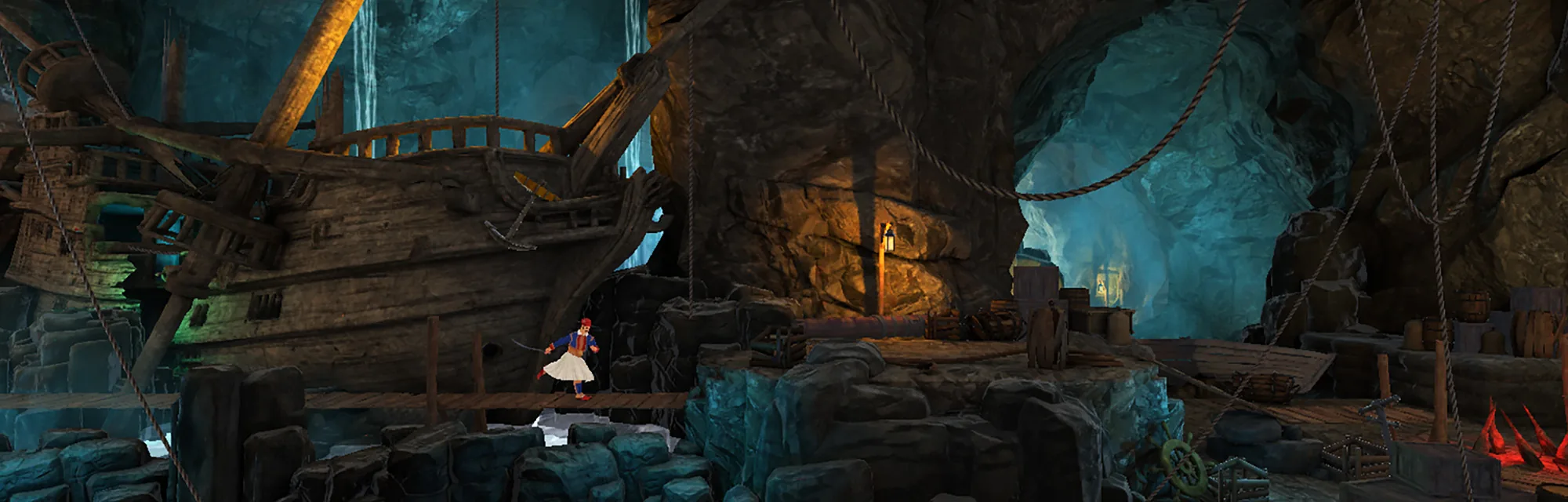
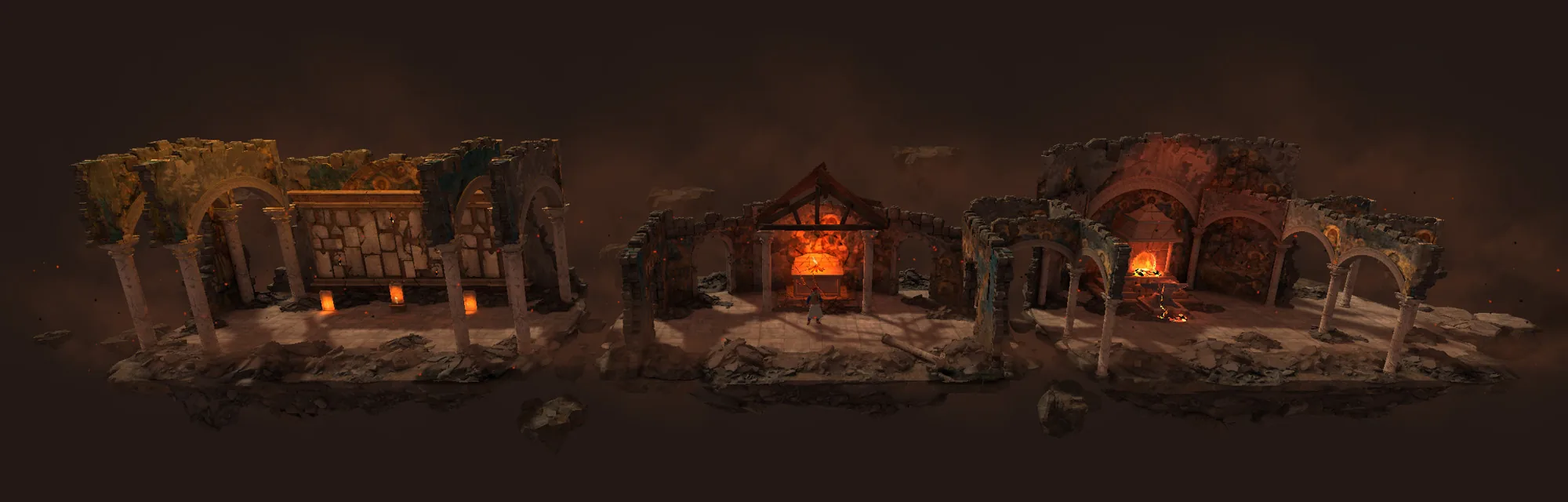
Every environment in Flames of Freedom: 1821 begins as an idea and develops through a sequence of visual exploration, 3D construction and final real-time presentation. Concept imagery helps establish atmosphere, composition and narrative direction before those ideas are translated into playable spaces.
Modern production tools, including AI-assisted concept development, give us greater freedom to explore ideas quickly and push visual directions further. The selected concepts then become the starting point for a much more deliberate process: building the environment in 3D, shaping it around gameplay and traversal, and developing materials, lighting and atmosphere until the original idea becomes a living interactive world.
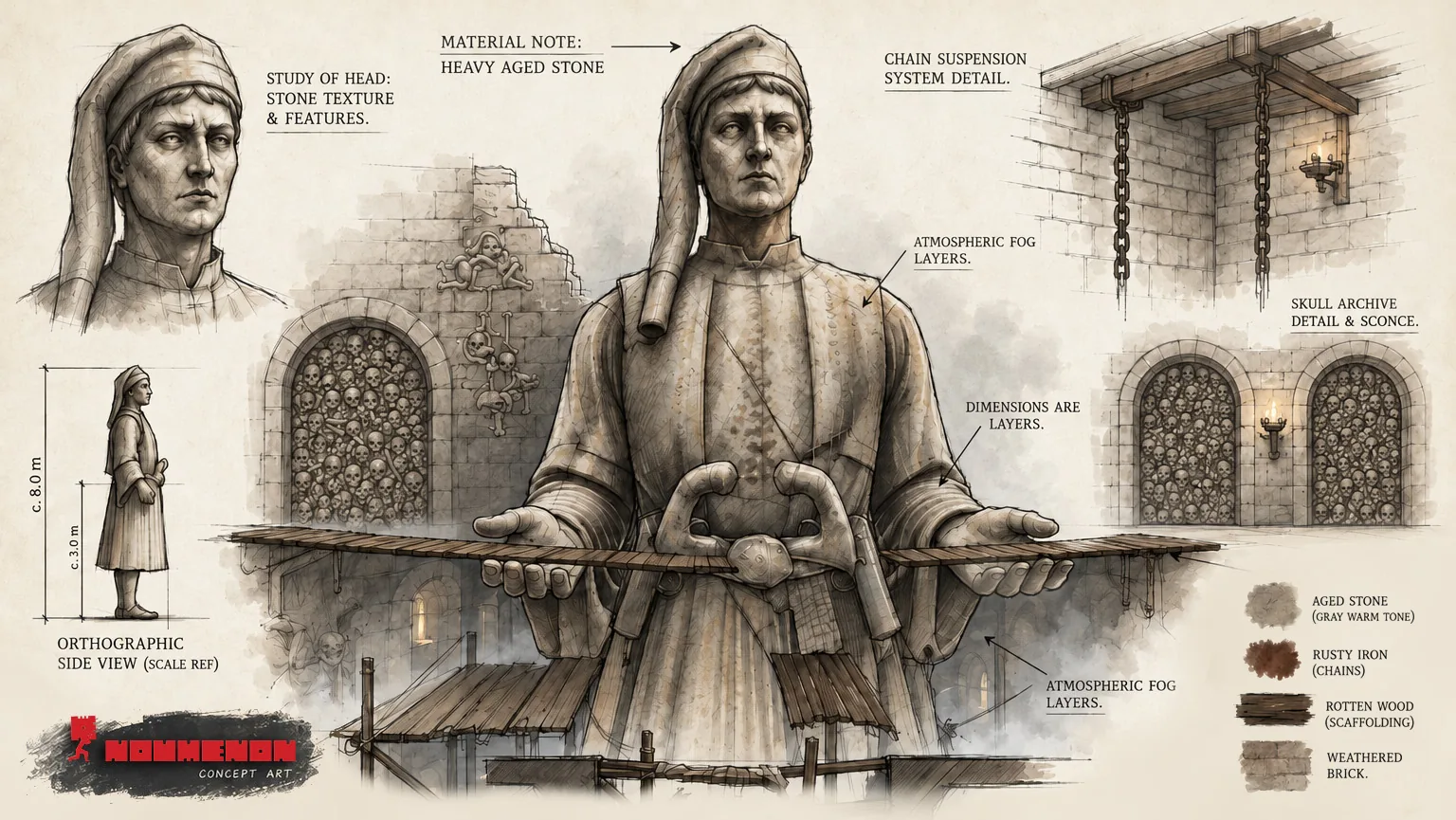
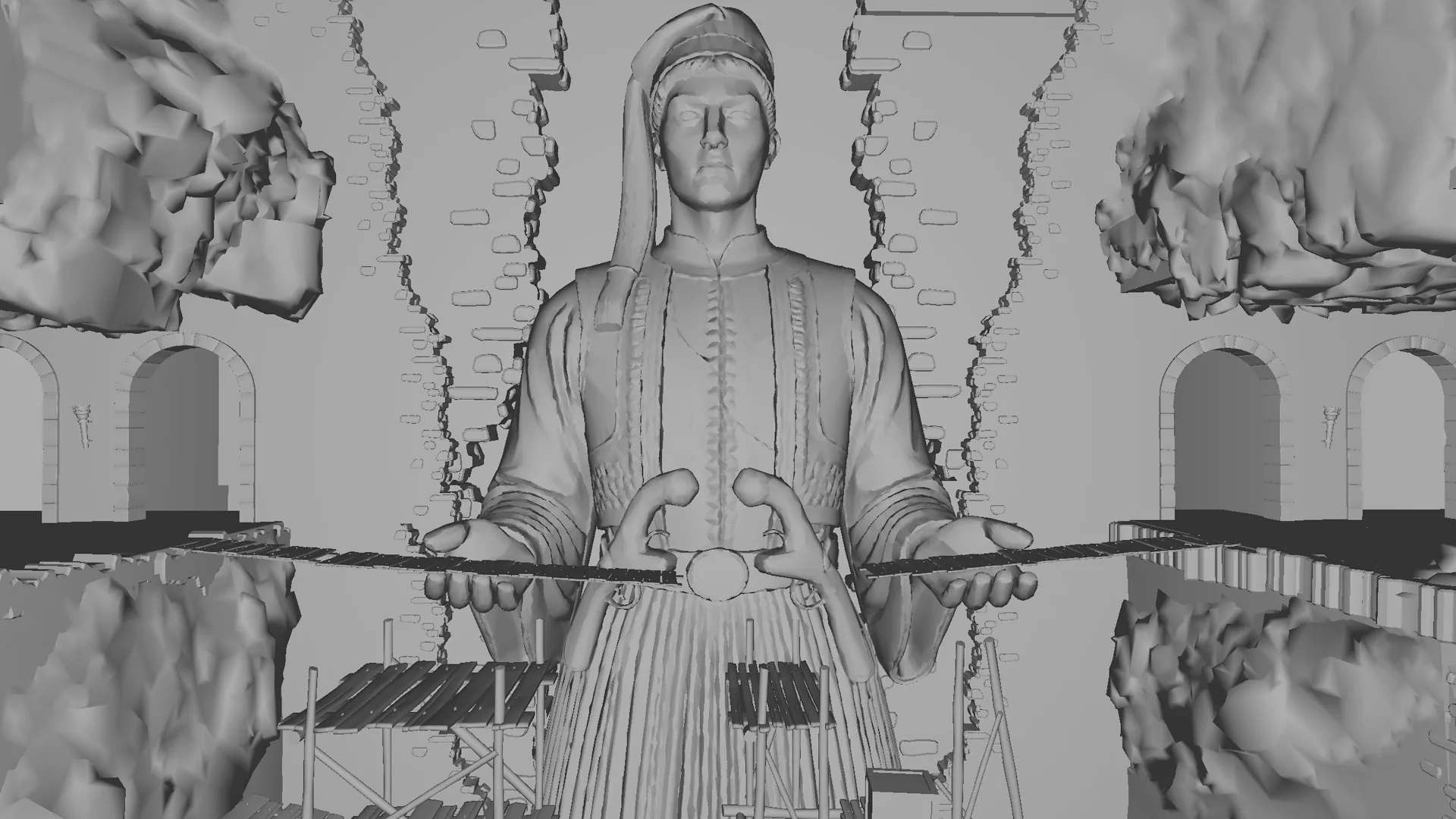
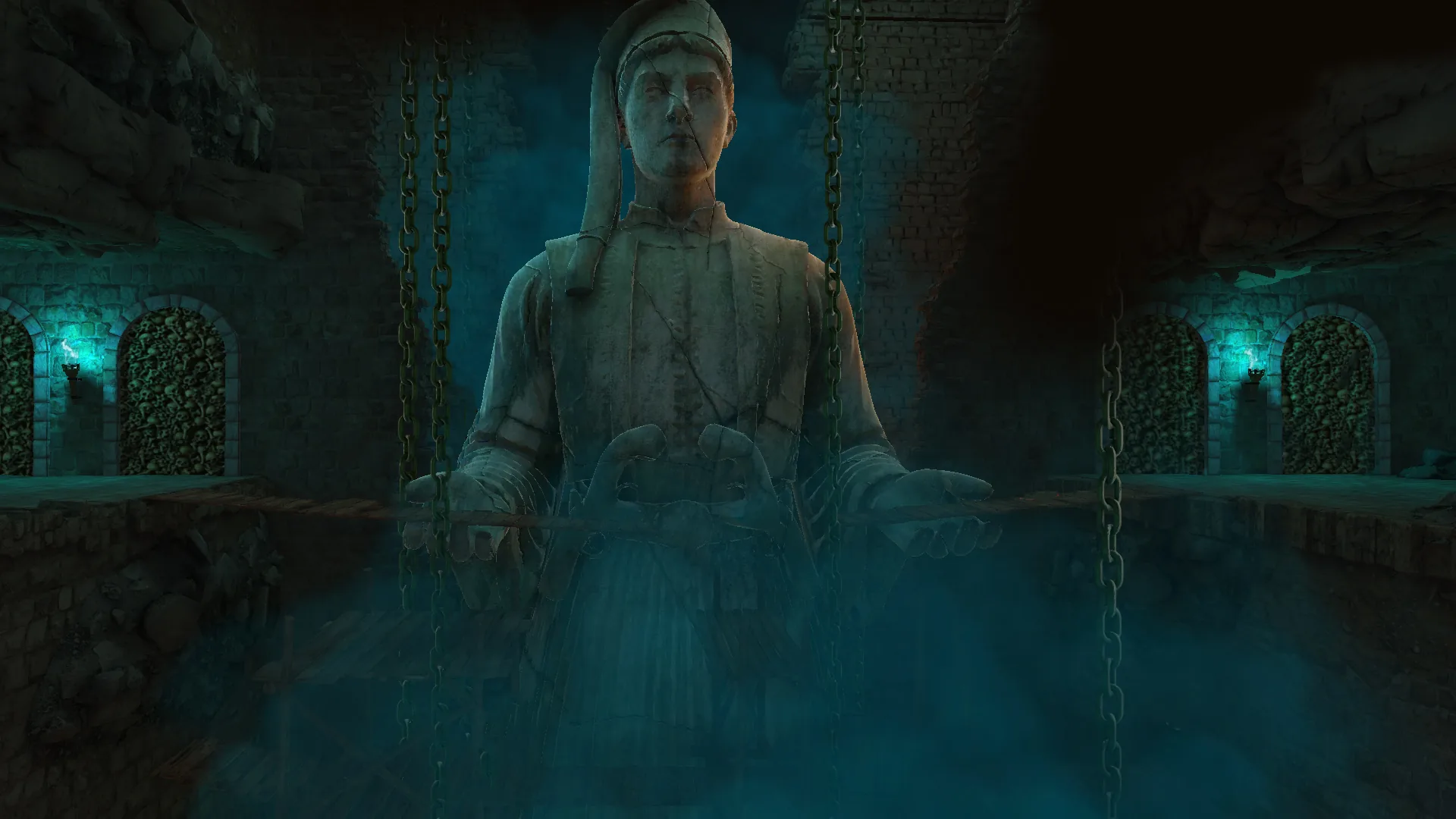
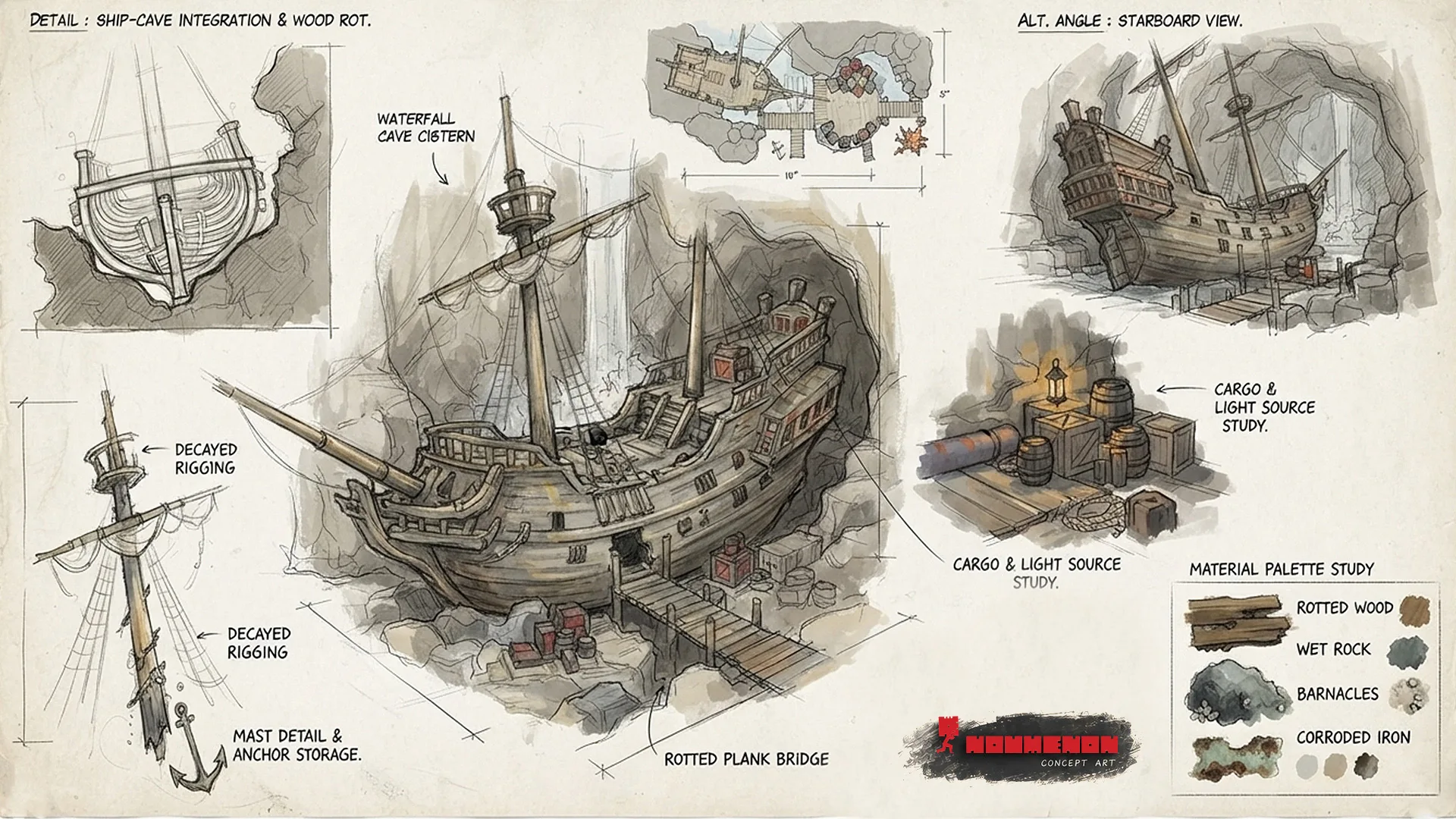
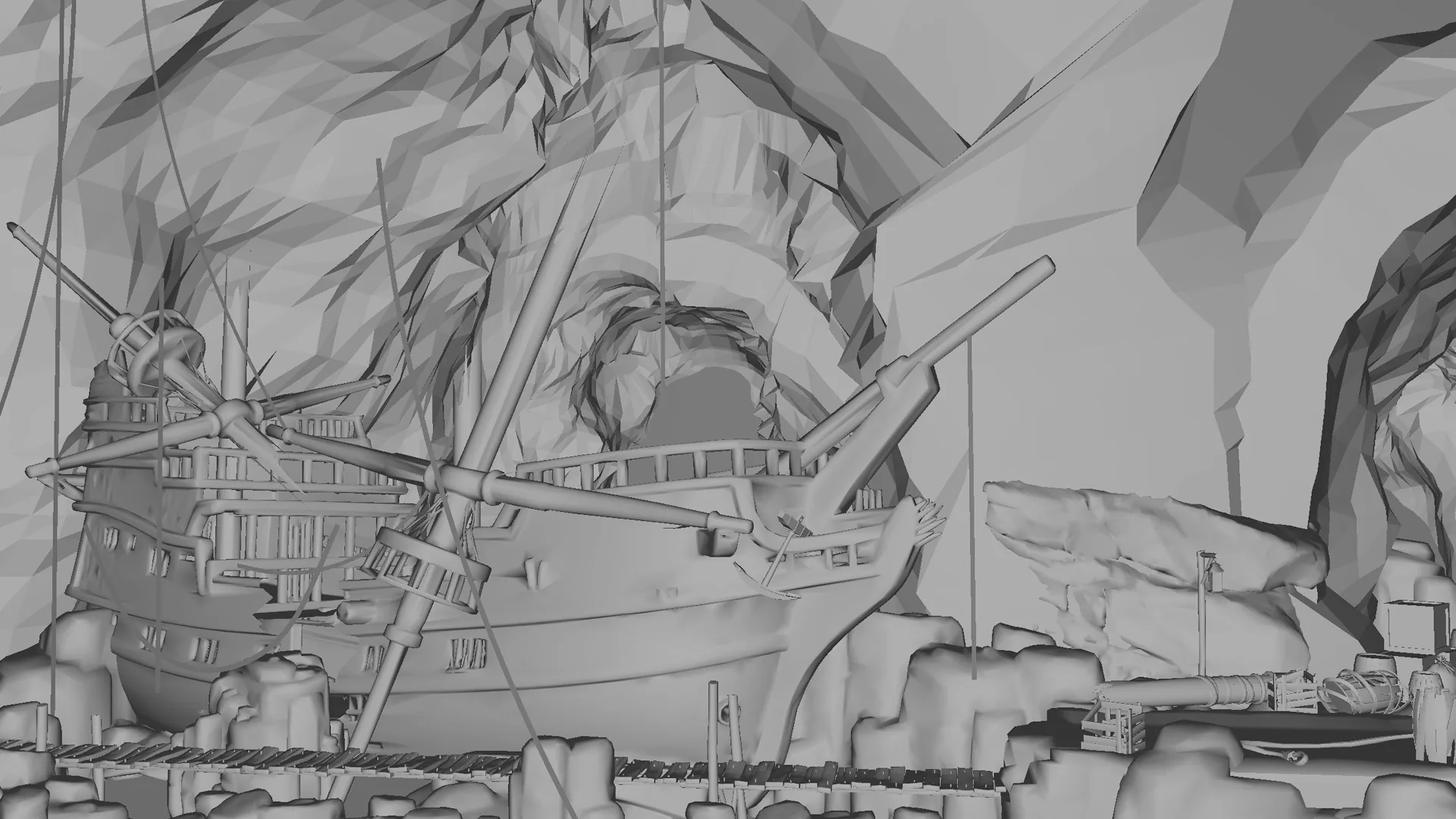
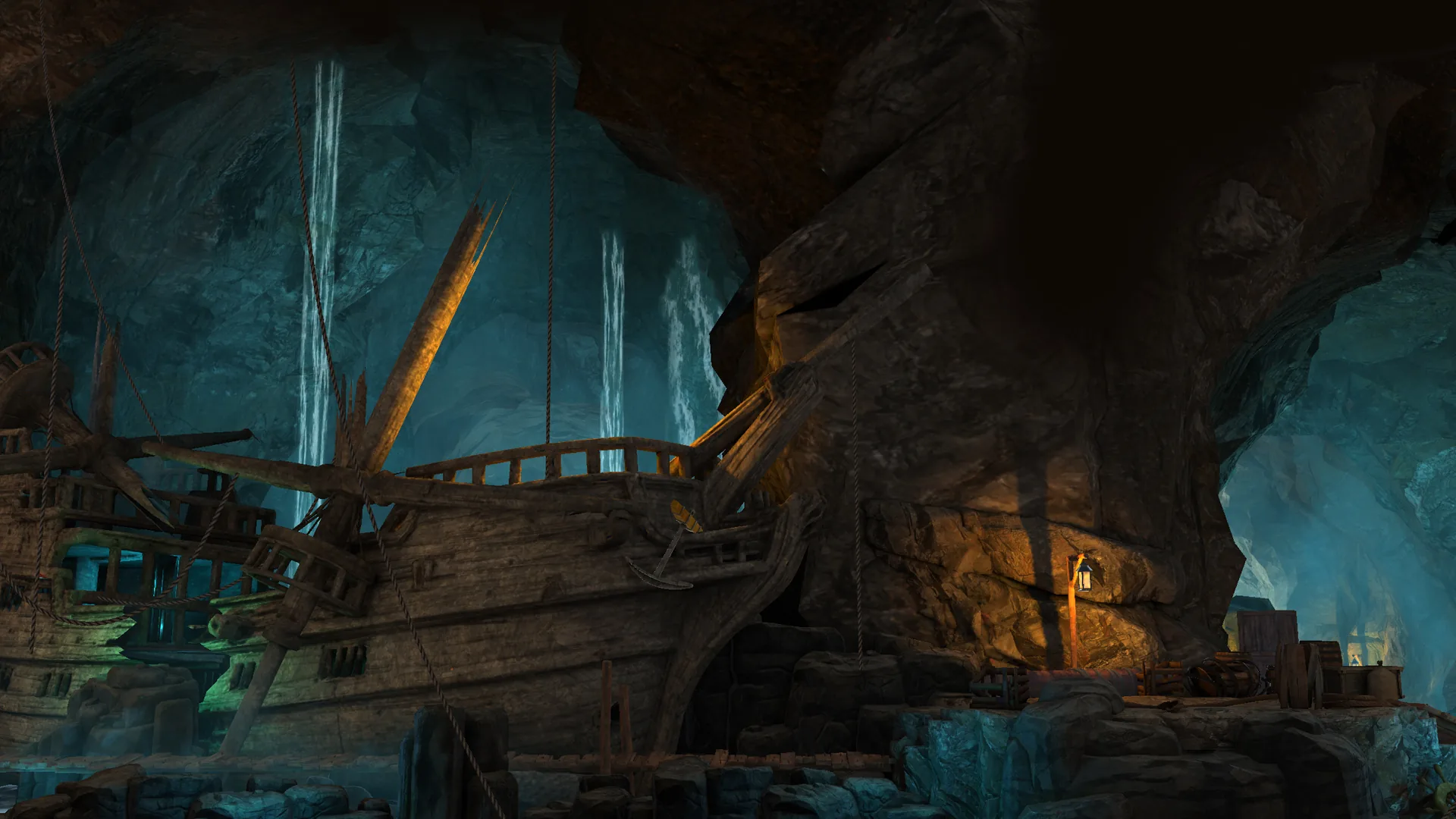
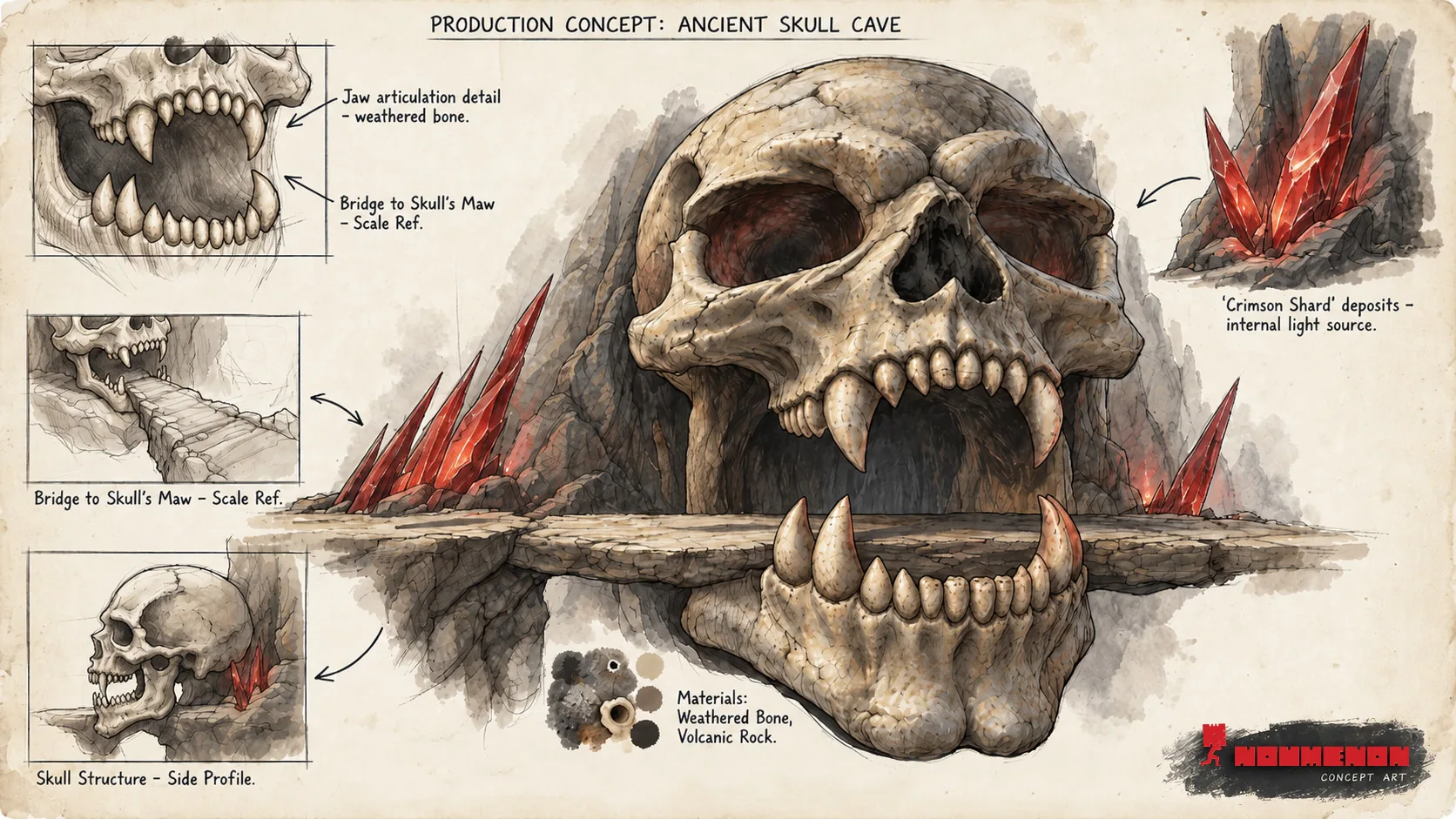
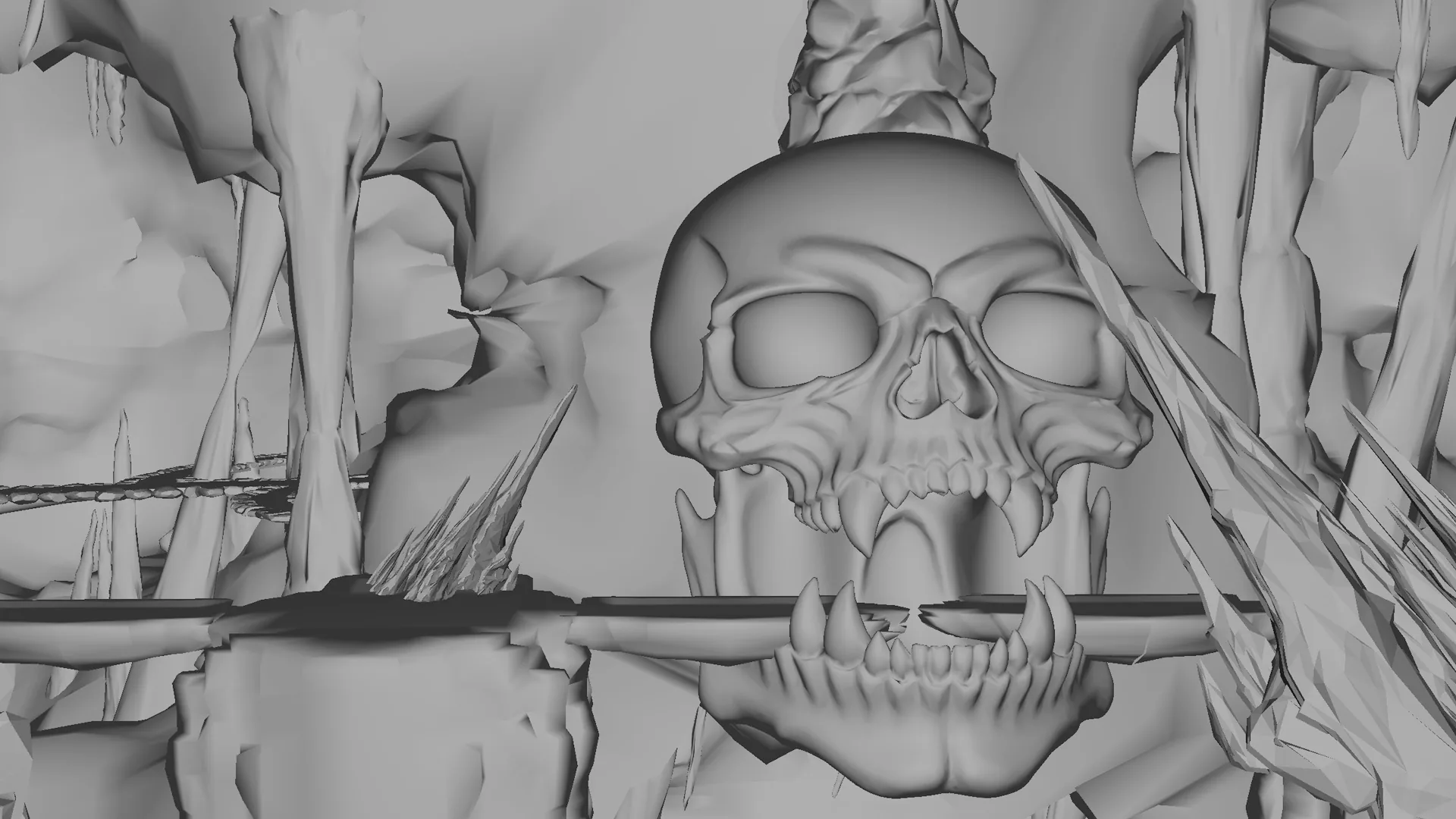
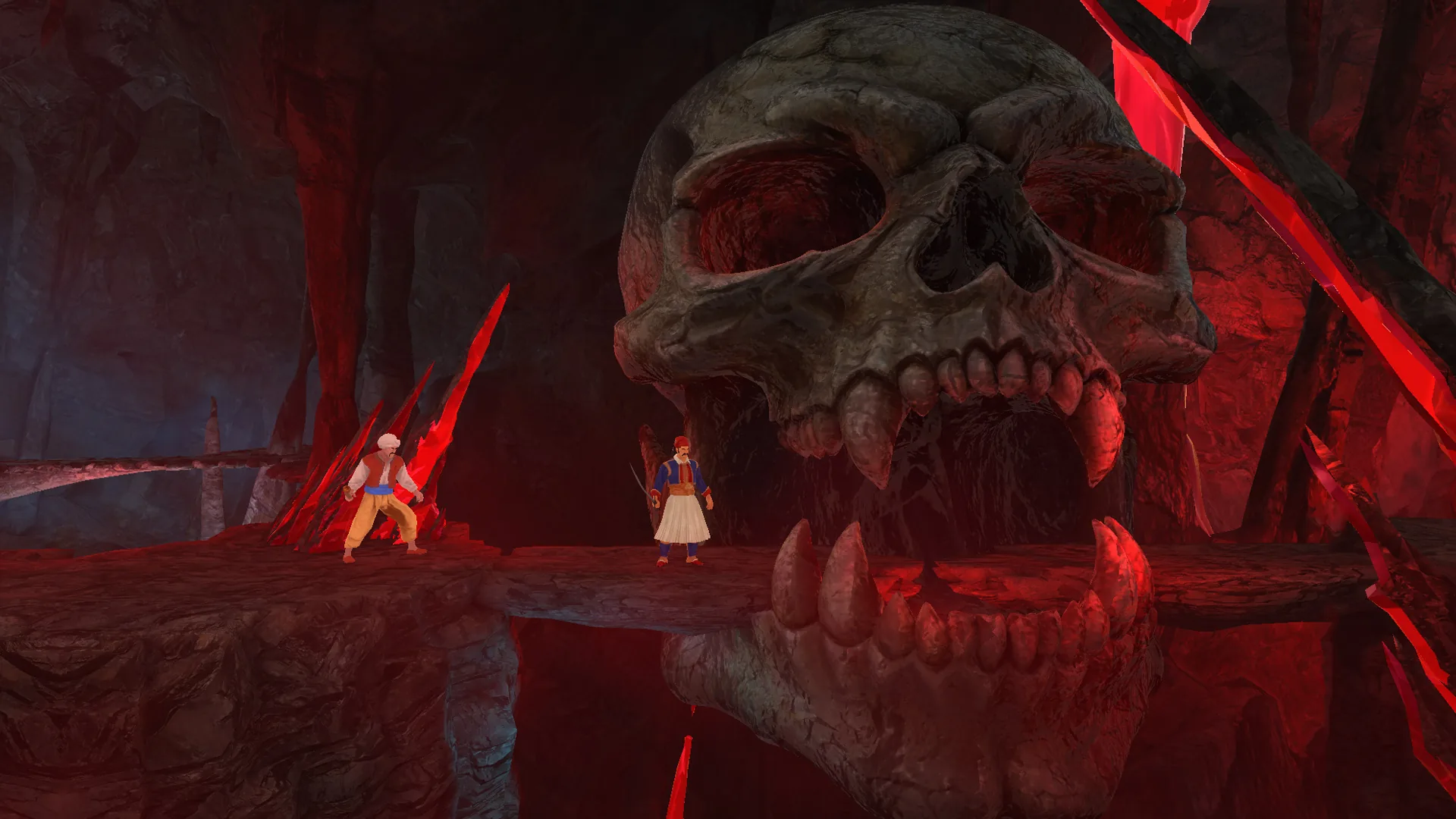
Technology accelerates exploration, but the world still has to be designed, modeled, constructed, lit and made playable.
FROM CONCEPT TO GAME-READY CHARACTER
The Priest shows how a character moves from visual direction to a production-ready real-time asset. Beginning with concept art, the design is translated into a clean base mesh, developed through clothing construction and high-resolution sculpting, then prepared, rigged and textured for use in the game.
Each stage resolves a different part of the character: proportion and silhouette, garment structure, surface detail, deformation and final material response. The goal is to preserve the identity established in the concept while creating an asset that can function reliably inside the real-time production pipeline.
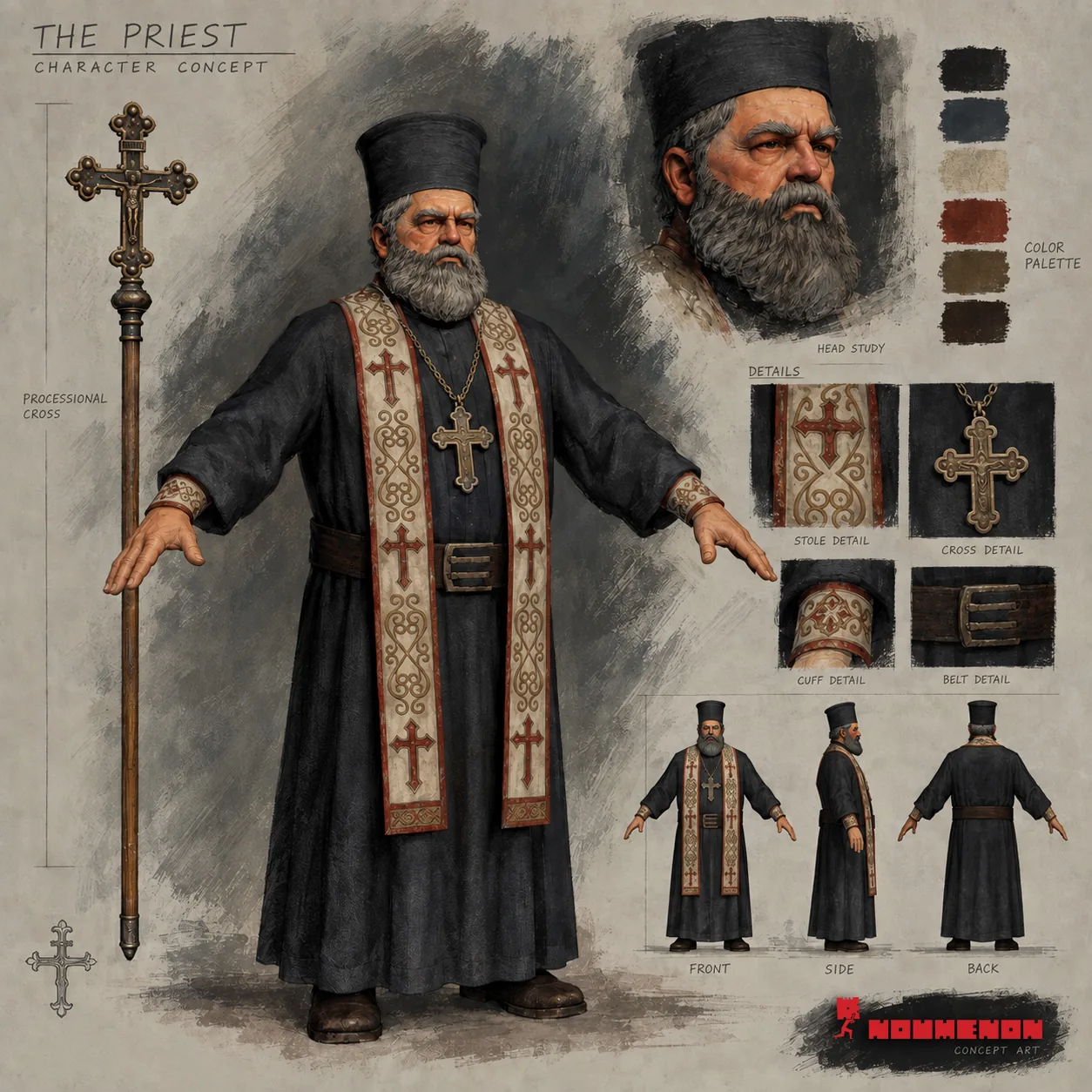
CONCEPT ART
Establishing the Priest’s silhouette, clothing language, materials and key visual details.
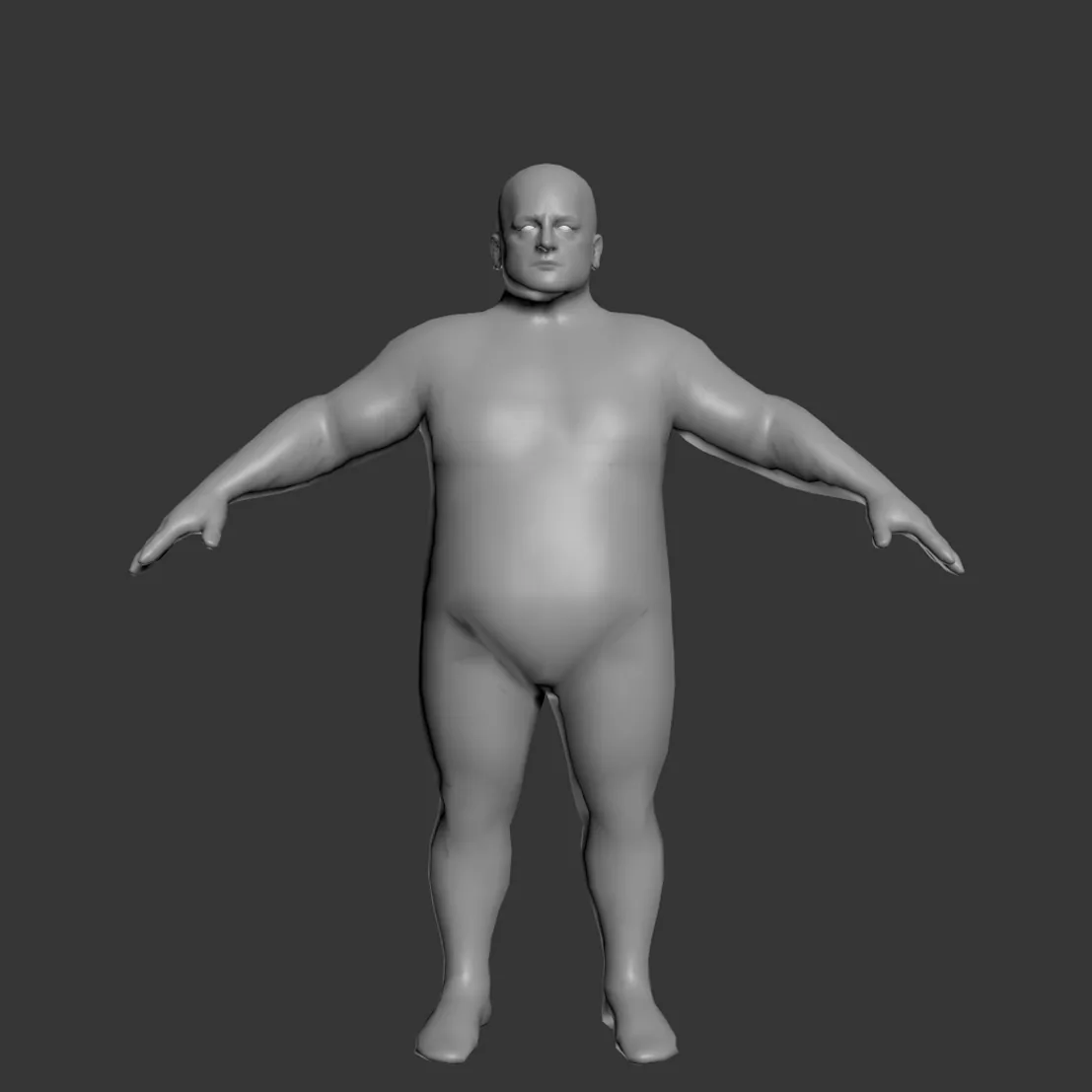
BASE MESH
Defining the underlying proportions and body volume that will support the finished character.
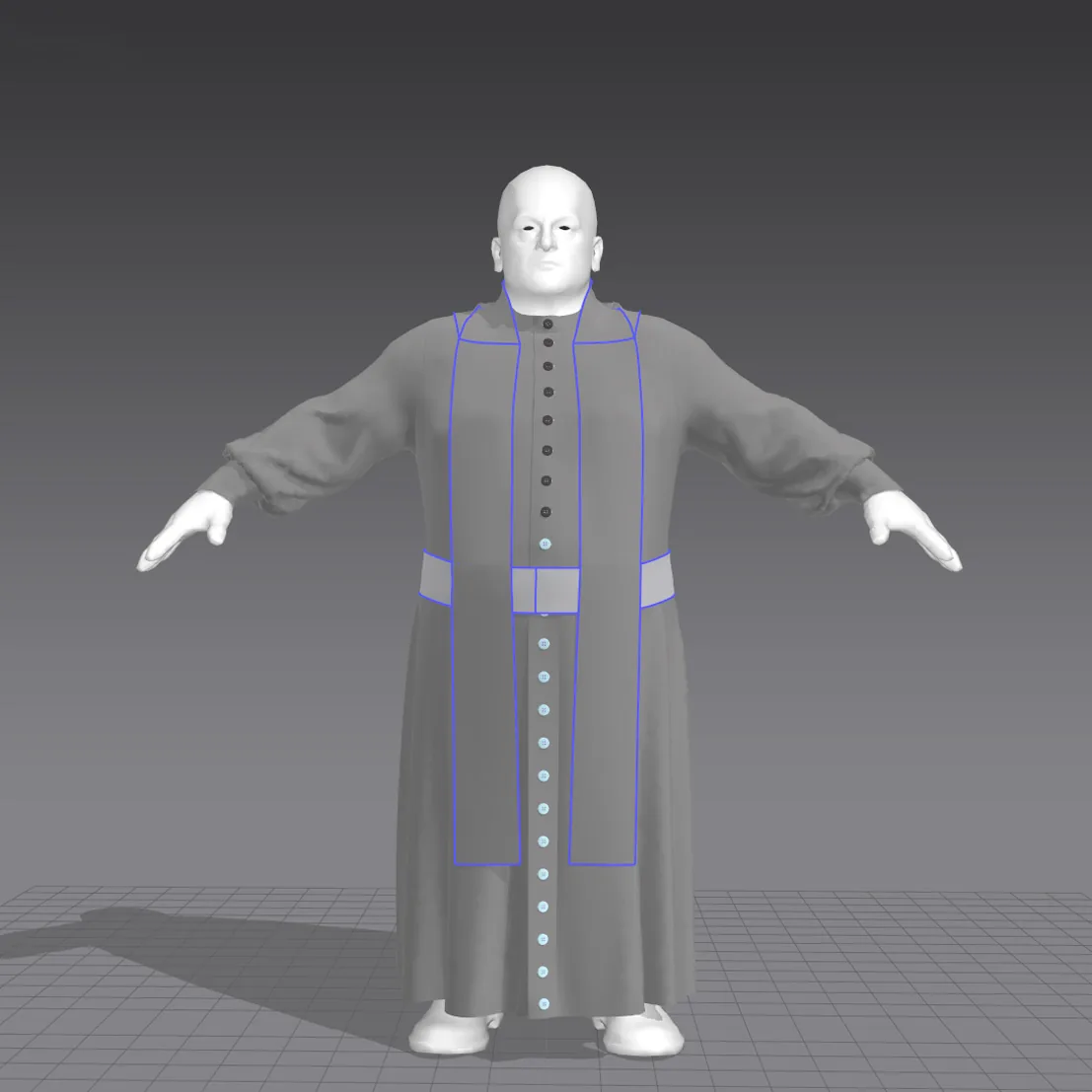
CLOTHING DEVELOPMENT
Translating the costume into workable 3D garments and resolving their construction around the character.
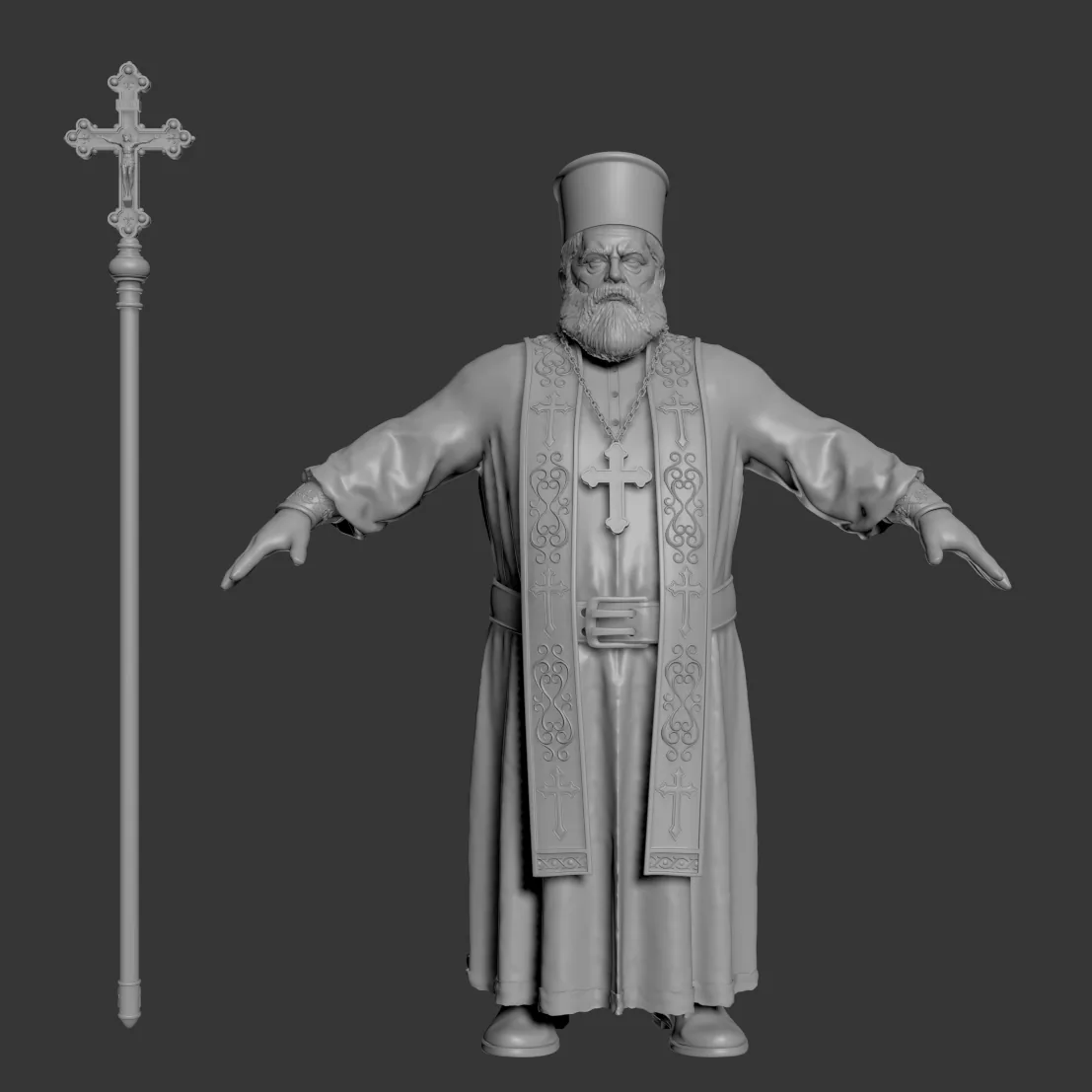
HIGH POLY MODEL
Refining anatomy, clothing forms, accessories and sculpted detail before real-time optimization.
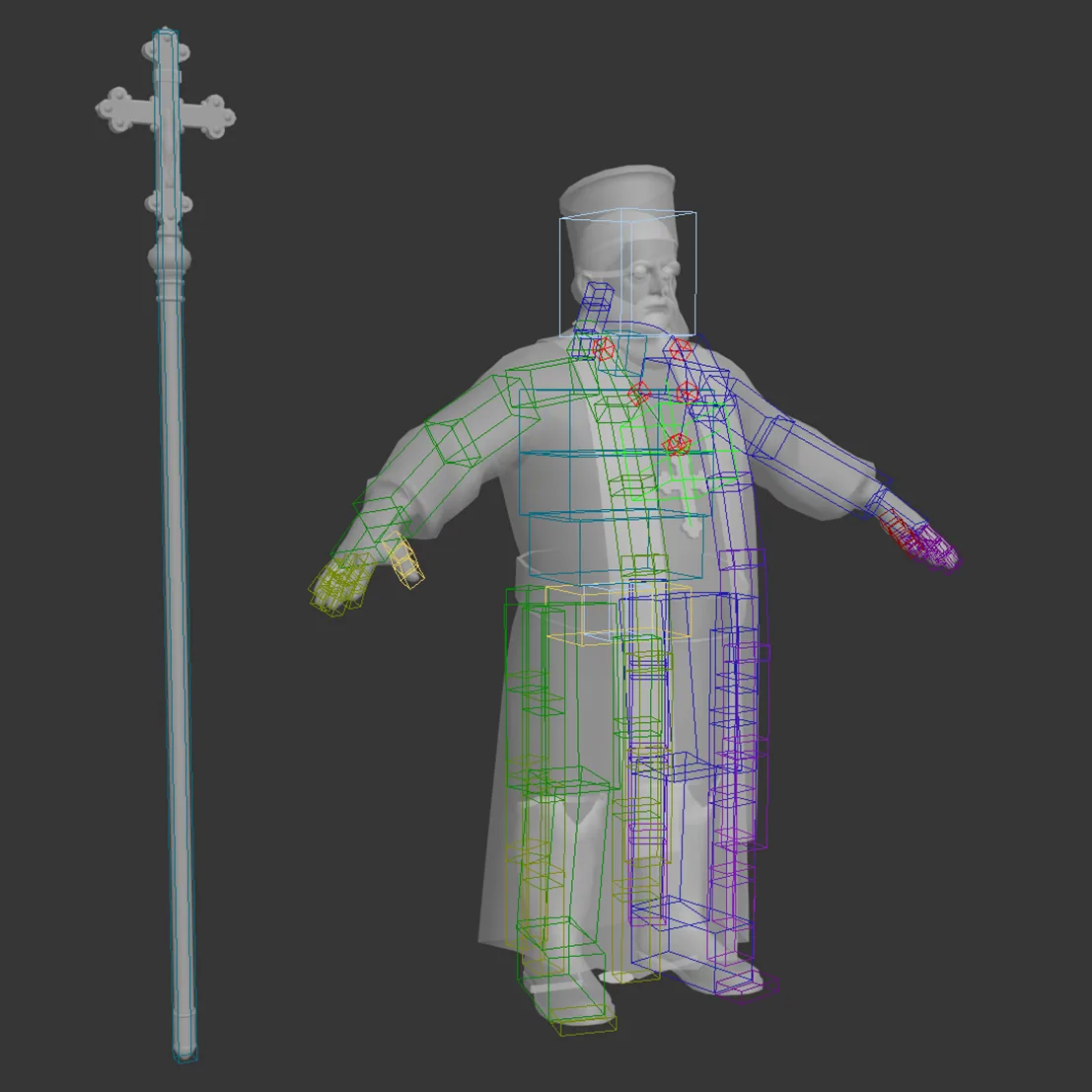
RIGGED GAME ASSET
Preparing the low-poly character and its equipment for deformation, animation and gameplay integration.
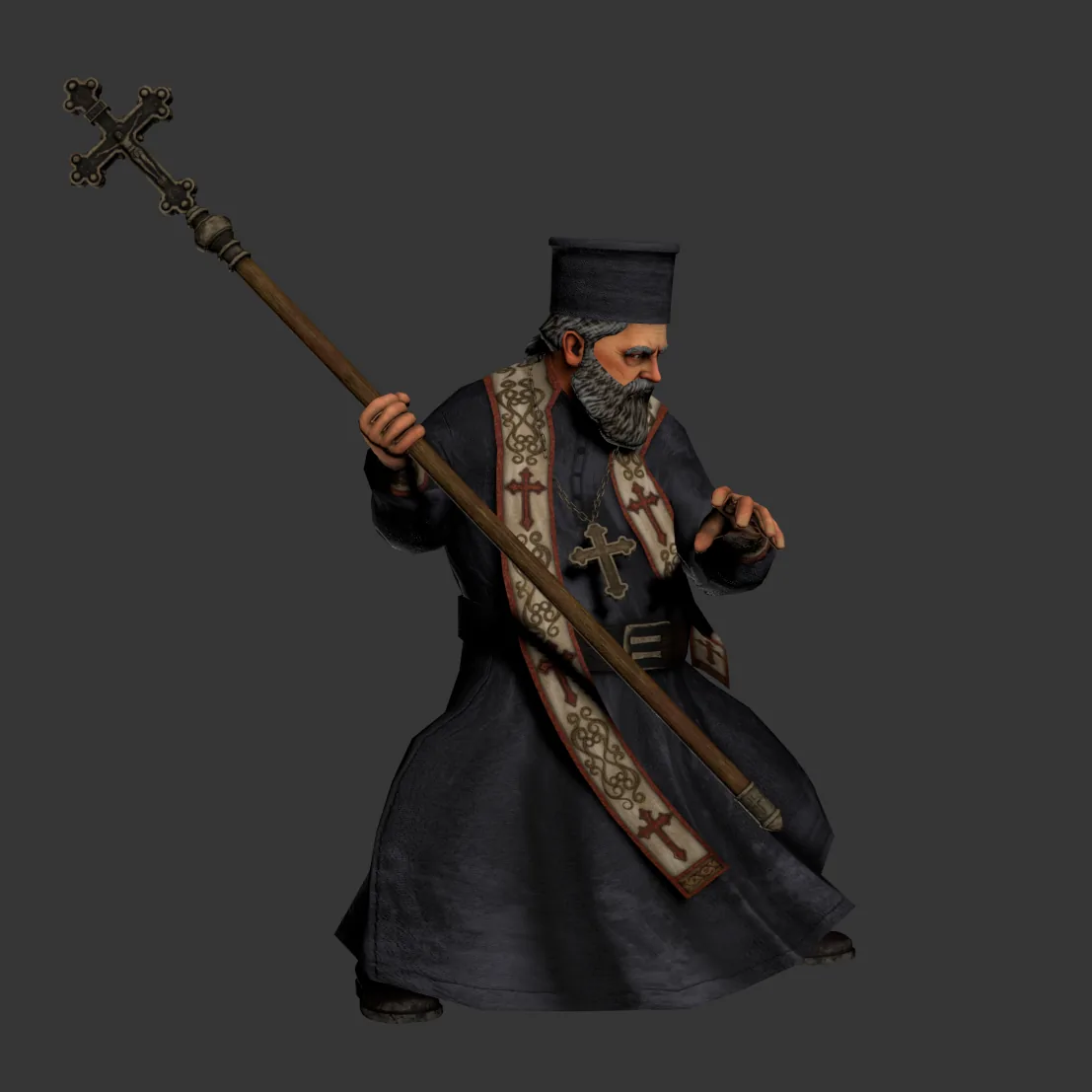
FINAL TEXTURED ASSET
The completed real-time character, with materials and textures carrying the original concept into the game.
BUILDING THE SYSTEM
A campaign attempt begins in Chapter I. Completing a Chapter leads to the Ashen Sanctuary, where earned Flames can be converted into progression before the next stage. Death ends the current attempt and returns the player to the Sanctuary before a new run begins.
The Sanctuary connects recovery and progression to the fiction of the game. Its principal spaces include the Flame Shrine, the Forge of Embers and the Wall of Ash.
Noumenon is building the real-time systems that connect player and enemy control, combat, health and damage, progression, UI and repeat-run logic in Unity.
CHAPTER I → COMBAT / EXPLORATION → CHAPTER COMPLETE → ASHEN SANCTUARY → NEXT CHAPTER
DEATH → ASHEN SANCTUARY → NEW RUN → CHAPTER I
FROM WORLD TO INTERFACE
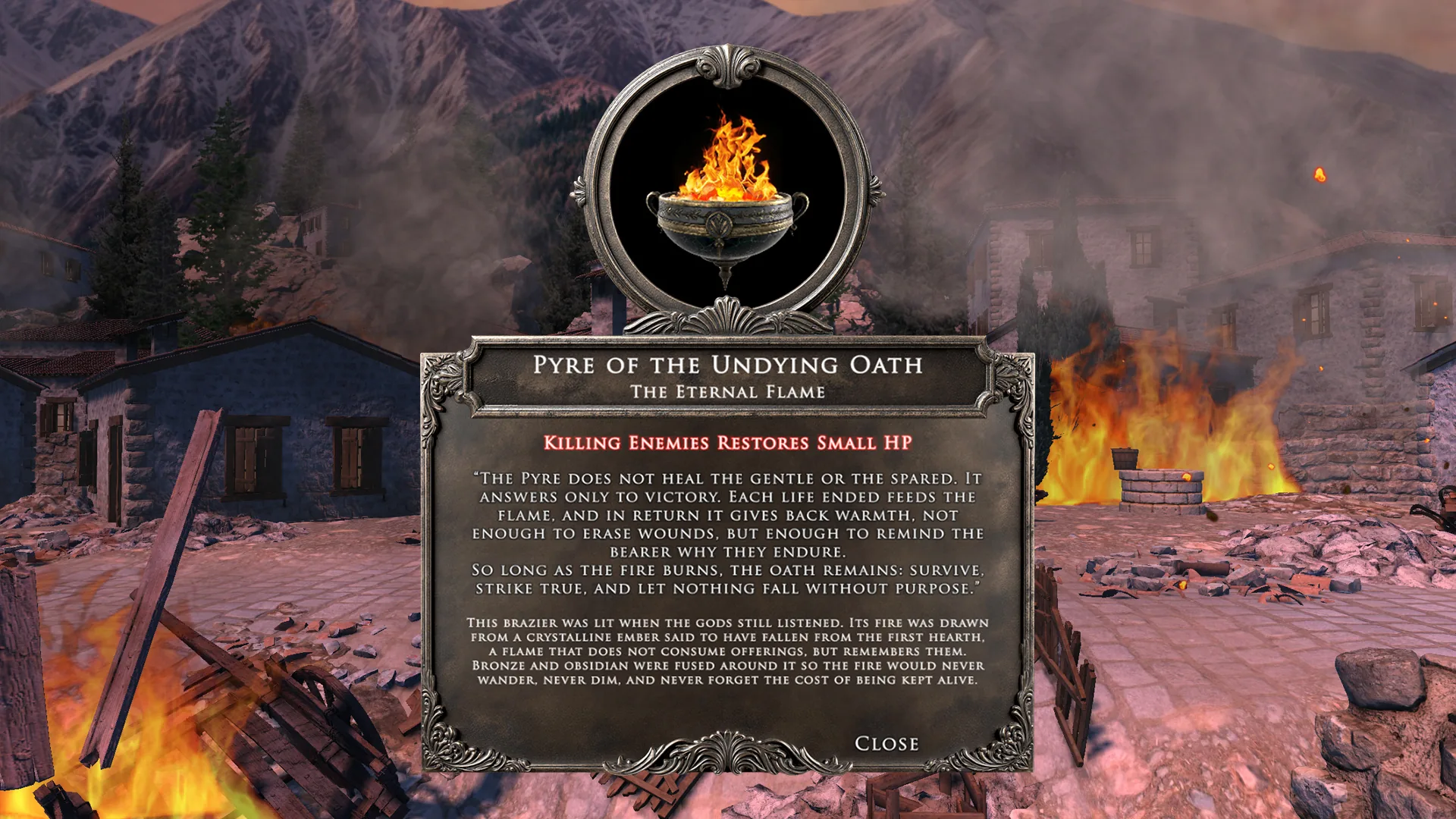
Building an original game means carrying the same world beyond its environments and characters. The visual identity of Flames of Freedom: 1821 extends into its interface, progression systems and the way information is presented to the player.
Menus, Relics, progression and in-game presentation are designed as part of the same world rather than as a separate layer placed over it. Historical and mythic references, material language, typography and graphic treatment work together with the environments and gameplay to give the project a consistent identity.
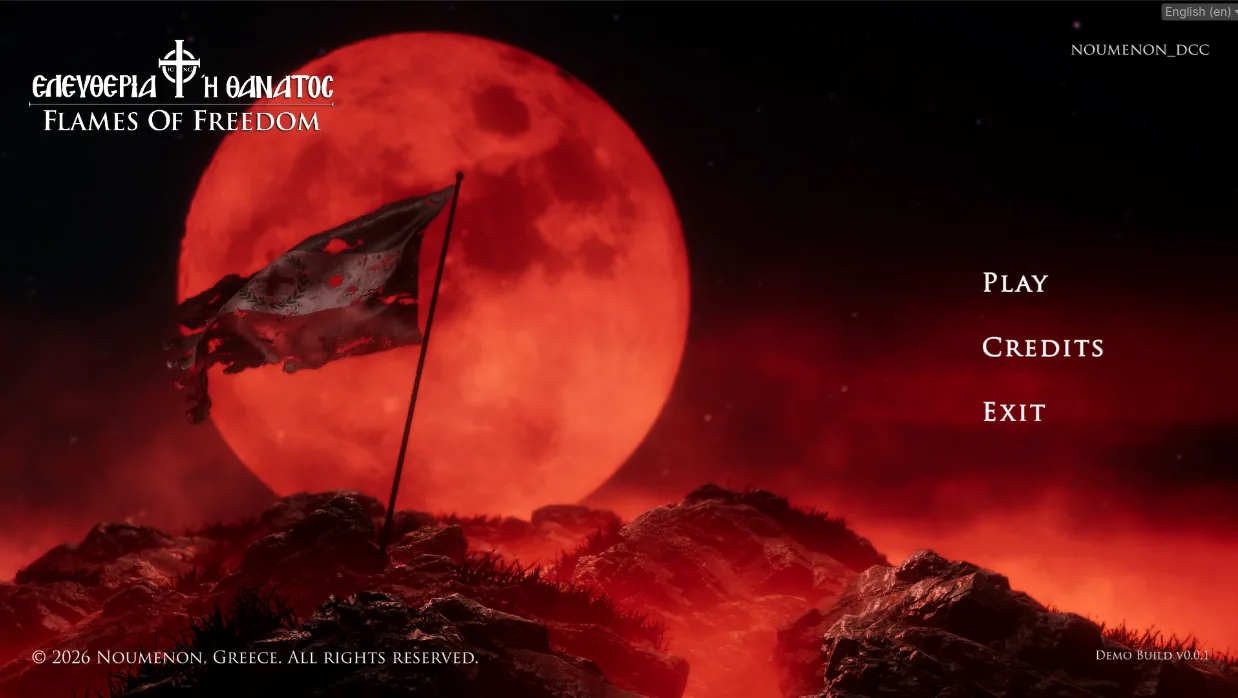
CURRENTLY IN EARLY ACCESS
Flames of Freedom: 1821 entered Steam Early Access on 25 March 2026 and remains in active development. Visit Steam for the current playable build and development updates.